
Telecom regulatory compliance has become a top priority for operators worldwide. As telecom operators face increasing pressure from regulators to align internal cost models with externally mandated pricing structures, the ability to demonstrate transparency and compliance is necessary. Especially as the economics of telecom shift, with mounting revenue pressure and more frequent accusations of unfair pricing.
“Telecom is no longer a slow-moving industry. It’s become geopolitical, globally exposed, and under pressure from all sides – financial, regulatory, and infrastructural.” — Carl Halewood, Telecom Finance Expert
What Is Telecom Regulatory Compliance?
Telecom regulatory compliance is the process by which telecom operators align their pricing, cost reporting, and business practices with rules set by national and regional regulators. It covers cost-based pricing methods like LRIC, network-retail cost separation, tax and licensing obligations, data privacy rules, and regular audits to prove market practices aren’t anti-competitive.
For operators, this means demonstrating that internal cost models match what regulators expect to see. Regulatory compliance is increasingly becoming an ongoing discipline rather than a one-time exercise, since regulators typically revisit pricing and cost justifications on a recurring basis.
Synchronizing Internal and External Reporting
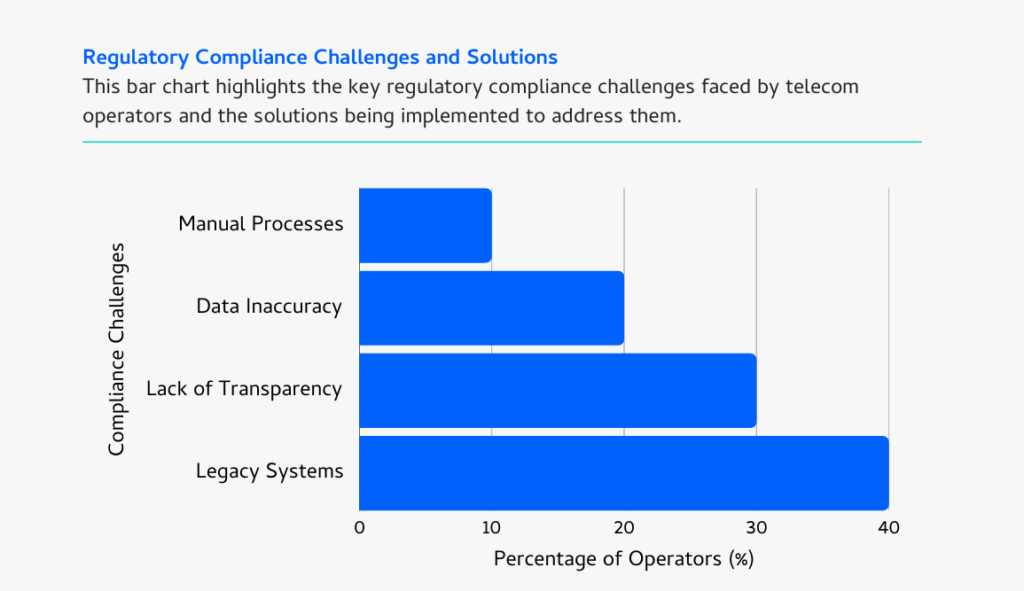
Traditional costing models, often maintained in spreadsheets or outdated legacy tools, are poorly equipped to meet modern regulatory standards. Regulators now require operators to justify pricing through cost-based methodologies, such as LRIC (Long Run Incremental Cost), and often demand separate reporting on network versus retail cost structures. This introduces both a compliance burden and a strategic opportunity.
Aligning internal cost views with regulatory frameworks ensures consistency across pricing, investment decisions, and reporting. It also provides defensibility when regulators raise questions about margin squeezes or market dominance claims. In Belgium, for example, the telecom regulator BIPT recently conducted margin squeeze tests at the product level, requiring operators to separate network and retail costing and justify margins using LRIC-based methodologies. Similar scrutiny is emerging across Europe, as national regulators update their methods and expect operators to prove cost-based pricing integrity. The expectation is clear: cost transparency must be granular, auditable, and regulator-ready.
Belgium’s Telecom Regulator Raises the Bar
In 2024, Belgium’s telecom regulator (BIPT) conducted margin squeeze tests on Proximus and other SMP operators, including their fiber and mobile service portfolios. Instead of just looking at overall pricing levels, BIPT demanded product-level margin validation, separating out network vs. retail costs and applying LRIC-based logic.
The message was clear: telecom regulatory compliance now requires granularity. Operators that lacked structured, transparent telecom cost models struggled to respond. No penalties were issued, but the expectation was set.
For finance professionals, it’s a signal: costing models must now withstand both commercial scrutiny and regulatory interrogation.
Margin Squeeze Tests Are Ongoing, Not One-Off Events
Margin squeeze tests are not typically a one-off event. They are often revisited on a regular basis, typically every six months or annually, as regulators recognize the ongoing risk of market power abuse through pricing strategies. Even if a telecom operator passes the test in one period, there is always the potential for price changes in the next.
This necessitates a continuous, robust system for monitoring and reporting—one that goes beyond ad-hoc, Excel-based solutions. A more structured, long-term approach is required, warranting investment in a dedicated telecommunications cost management tool.
Organizations that adopt structured, auditable systems gain more than just the ability to respond quickly during regulatory audits. They establish a solid foundation for long-term regulatory alignment. This approach not only reduces friction in reporting but also enhances transparency, enabling telecom companies to foster greater internal confidence in their financial data and regulatory compliance efforts.
Reducing Audit Pain and Telecom Compliance Risk
Many operators still rely on manual Excel models or an outdated, incompatible system for regulatory submissions. While flexible, these models are inherently opaque, difficult to audit, and highly error-prone. This exposes organizations to compliance risk, especially as regulatory demands grow in complexity.
By shifting to purpose-built solutions, operators can:
- Generate regulator-ready reports on demand
- Maintain clear audit trails for all assumptions and inputs
- Reduce manual workload and eliminate model inconsistencies
Regulatory alignment is not just about satisfying the authorities. It’s about ensuring that internal decision-making and external accountability are synchronized. Operators who embed telecom regulatory compliance into their architecture gain both strategic clarity and regulatory confidence.
“What telecom operators need now is agility. The ability to iterate on models, maintain full transparency, and adapt to regulatory or commercial shifts without waiting weeks to run a new scenario. That’s what modern finance teams expect.” — Sander den Hartog, CEO, CostPerform
Setting the Standard, Not Just Following It
In many markets, regulatory bodies are still evolving their expectations around pricing transparency, cost allocation, and AI- or platform-driven bandwidth usage. This creates uncertainty but also an opportunity.
Telecom operators with structured, auditable models are better positioned not just to comply, but to lead. By proactively sharing clear logic and demonstrating internal consistency, they can influence how standards are set. Regulators welcome clarity, and operators who provide it early often help shape the frameworks that others must later adopt.
Cost transparency isn’t just about defensiveness. It’s a way to lead the conversation.
“What these telcos need now is agility. Iterative modeling, full transparency, and flexibility to respond to regulatory and commercial shifts without waiting weeks to run a new model. That’s what modern telecom finance requires.” — Sander den Hartog, CEO, CostPerform
Telecom Regulatory Compliance Starts with Transparency
Telecom regulatory compliance is accelerating in both complexity and frequency. To stay ahead, operators need more than spreadsheets, they need structured transparency and the agility to respond quickly.
By aligning internal reporting with external expectations, companies not only reduce audit pain but build strategic resilience in an evolving regulatory world.
Learn how CostPerform supports Telecom Regulatory Compliance
See how BT navigated complex regulatory requirements using CostPerform, read the BT and CostPerform case study to learn best practices and avoid common pitfalls.
FAQs about Telecom Regulatory Compliance
Who regulates telecom compliance?
National bodies oversee telecom pricing and cost compliance, often applying tests such as margin squeeze reviews to SMP (significant market power) operators. Requirements vary by market, but the trend is toward stricter, more granular oversight.
What is LRIC and why does it matter for telecom regulatory compliance?
LRIC (Long Run Incremental Cost) is a cost-based pricing methodology regulators use to check whether an operator’s prices reflect genuine costs rather than market dominance. It’s central to margin squeeze tests, requiring operators to separate network and retail costs and justify pricing accordingly.
What are the biggest telecom compliance risks?
The main risk to telecom compliance is relying on manual, spreadsheet-based cost models that can’t produce clear, auditable reporting on demand. This makes it harder to respond quickly to regulator requests and increases exposure to errors, inconsistencies, and compliance gaps.