Enterprise finance teams typically have a vast store of data at their fingertips. Whether it’s a bank collecting transaction data on every account, or a retail business with a database of every purchase made. Yet creating insights from that vast sea of data is a major challenge. This is where companies turn to Managerial Accounting Software.
In the enterprise landscape of today, there are numerous AI tools promising to close this gap between broadly available data, and actionable insights. But AI tools are plagued by hallucinations, and a “black box” syndrome, were it’s impossible to understand how a calculation was reached.
For a large enterprise, software point solutions still reign supreme. The SaaS (software-as-a-service) ecosystem continues to evolve and solve ever further problems. In this article, we will outline some of the areas that software helps Fortune 500 companies in managerial accounting, including:
- Budgeting & Forecasting
- Cost Allocation & Modeling
- Internal Reporting & Dashboards
What is Managerial Accounting Software?
A simple definition: Managerial accounting software helps internal stakeholders in a business understand where money is going, and why. “Internal” is a key point of emphasis. The area of accounting that deals with compliance, shareholder reporting, and legal governance is known as financial accounting. Therefore, managerial accounting can be described as the “data machine” behind enterprise decision-making, the cerebral brain of an organization.
The categories of Managerial Accounting Software
Budgeting & Forecasting software
This category of software focuses on creating and maintaining budgets. It can assess past spending, review ongoing opex (operational expenditure), and oversee capex (capital expenditure). These tools reduce the operational burden of planning a budget or creating an annual forecast. By connecting directly to vast data sources, they reduce time spent and improve the accuracy of budgeting and forecasting.
Popular budgeting & forecasting tools include:
● Anaplan: A cloud-based enterprise planning platform that replaces fragmented spreadsheets by connecting budgets and forecasts across departments such as Finance, Sales, and HR.
● CostPerform: While its primary strength lies in cost allocation and modeling (detailed below), it also functions as a capable budgeting and forecasting tool, allowing finance teams to build driver-based budgets and forecast future costs.
Cost Allocation & Modelling
Cost allocation is the area of accounting which describes how costs are assigned from one department or activity to another. It’s closely related to activity-based costing. In simple terms, a manufacturing business needs to know how much IT, HR, or machine resources a product uses in order to price it profitabily. In large businesses, allocations from one department to another become a vital exercise in understanding resource usage, and planning. An improper allocation can wrongly subsidize a product or department to the tune of billions of dollars.
This is why organizations typically turn to a dedicated cost allocation software solution when they reach a certain scale. Companies turning over 100M dollars or more generally have sufficient complexity to justify adding this software to their finance departments.
Popular cost allocation & modelling tools include:
- CostPerform: Also featured in the budgeting and forecasting section above, CostPerform’s core expertise lies in cost allocation & modelling. It is industry leader for
- SAP PCM: PCM (Profitiability and Cost Management) is SAP’s dedicated solution for activity-based costing and profitability modelling, which includes driver-based budgeting and “what-if” forecasting capabilities. PCM is a legacy tool, being replaced by point-solutions like CostPerform at large enterprises.
Internal Reporting & Dashboards.
Finance teams also use dedicated reporting and dashboarding software to enhance managerial accounting decision-making. These tools may resemble reporting solutions used in other departments but are tailored to financial data, presenting it in digestible formats for stakeholders.
Popular internal reporting & dashboards tools include:
- PowerBI: The most widely adopted reporting tool in enterprise finance. PowerBI is an especially a popular choice for businesses already working with Microsoft 365 or Azure suite. PowerBI works with data created in tools like CostPerform, enabling stakeholders to visualize results in practical dashboards.
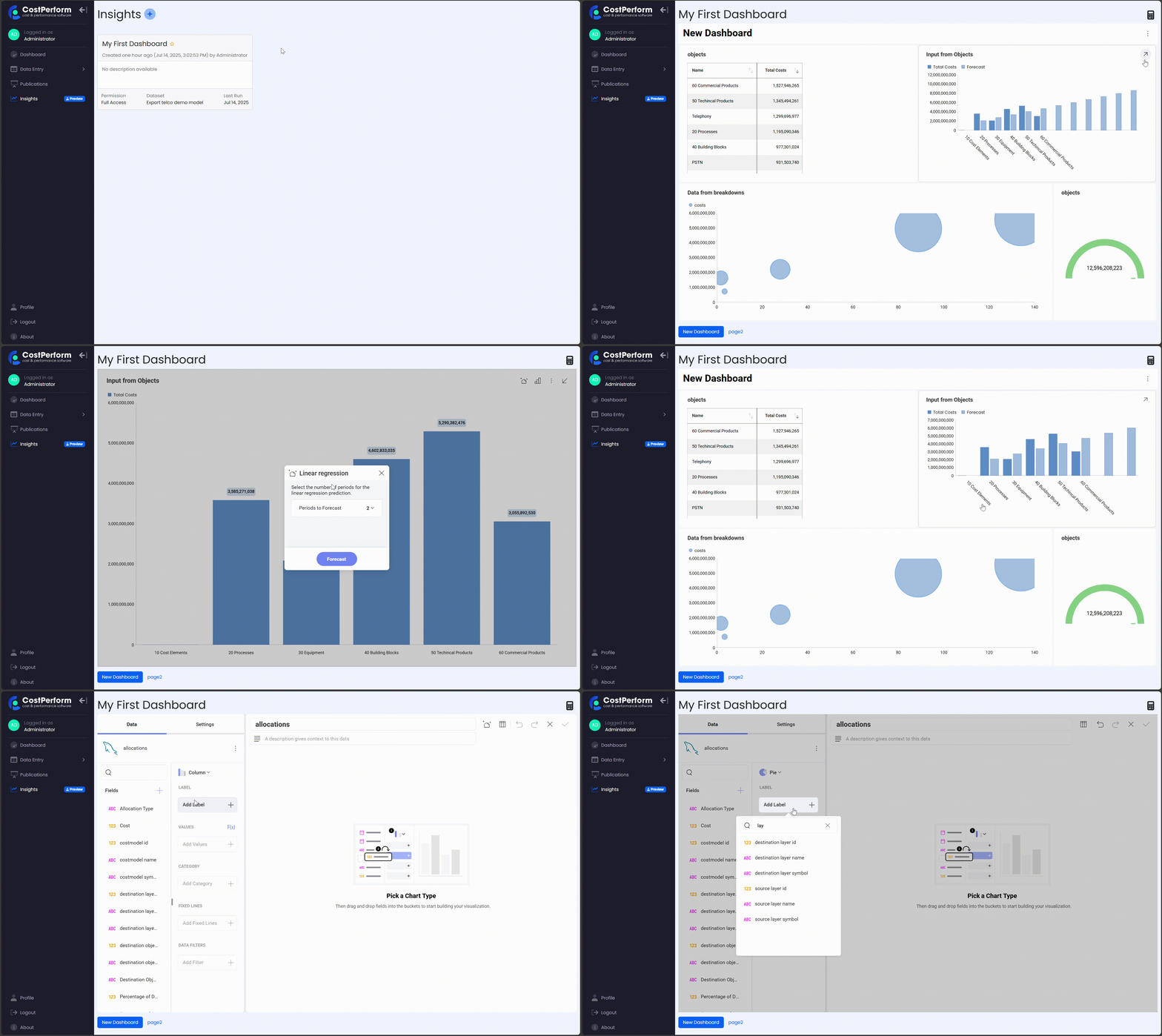
- CostPerform Insights: The built-in dashboarding and data visualization interface of CostPerform is known as CostPerform Insights. Insights helps businesses to quickly turn raw data to visual and actionable dashboards.
Why not just use Excel Spreadsheets?
In most cases, the tools covered in this article replace spreadsheets. The reason point solutions are economically viable, and often necessary, is simple: complexity justifies the means. When dealing with millions of transaction records, billions in revenue, or thousands of employees, spreadsheet-based solutions become increasingly difficult to manage. A failure or inefficiency is too expensive to risk.
As a result, finance departments in growing businesses systematically increase their software investment as complexity and organization size rises.
How to choose the right Managerial Accounting Software?
Choosing the right category of software starts with a clear problem statement. Is the goal to improve budgeting agility and speed? Reduce operational burden and free up capacity for other initiatives? Or gain deeper insights for senior decision-makers?
When moving into vendor selection, CostPerform’s How to Buy Software guide outlines the process step-by-step for enterprise professionals. It covers research methods, highlights common pitfalls, and helps buyers stay informed throughout a complex procurement process.